How to Prevent Windows from Freezing Shut in Winter
Winter can be a real test for your home's windows. The last thing you want on a bitter January morning is a window frozen so tight it’s impossible to open. Whether you need fresh air, emergency access, or just want to keep your home safe, frozen windows are more than just an inconvenience—they’re a sign your home needs some winter TLC.
At Champion Windows, we know what it takes to keep the cold out and your windows working all season long. As an experienced windows_contractor, we’ve helped thousands of homeowners get ready for winter and respond to frozen-window emergencies. Read on for practical, proven advice to keep your windows—and your peace of mind—operating through every cold snap.
Why Windows Freeze Shut ❄️
Ever wonder why your window feels glued shut after a frosty night? It comes down to an unpleasant mix of moisture, temperature swings, and drafts. Here’s what’s really going on:
- Moisture: Humid air inside your home meets freezing glass, creating frost and ice in the tracks or on seals.
- Drafts: Leaky seals or gaps let in cold air, which rapidly cools the window frame and encourages ice buildup.
- Temperature Fluctuations: Warm days and cold nights cause condensation, which can freeze overnight.
Think of your window as a bridge between two worlds—warm indoors and bitter cold outside. Any weak spot in that bridge lets in trouble.
Prevention Tips
A stitch in time saves nine, especially with windows. Here’s how to stop the freeze before it starts:
- Weatherstripping: Replace worn or cracked weatherstripping to seal out drafts. Foam tape or V-strip weatherstripping are easy DIY upgrades.
- Insulation: Use insulated curtains or window film kits for an extra layer of defense.
- Humidity Control: Keep indoor humidity around 30-40%. Use exhaust fans in kitchens and bathrooms, and consider a dehumidifier if you have persistent moisture.
- Regular Checks: Inspect window frames and sills for gaps, cracks, or weak caulking.
- Window Lock Installation: Properly installed locks keep windows closed tight, preventing warm, moist air from getting trapped between sashes. Learn more about our Window Lock Installation service.
Quick Safety Checklist
Before the snow piles up, run through this list. It’s like prepping your car before a road trip:
- Check for drafts with a lit candle—watch for the flame to flicker near window edges.
- Feel for cold spots along the glass and frames.
- Test each lock to make sure it’s secure and tight.
- Look for condensation or frost on the inside.
- Make sure all windows open and close smoothly, without sticking.
How to Safely Defrost Frozen Windows
Don’t force it. Yanking or banging on a frozen window can crack glass or damage the frame. Here’s a safer way:
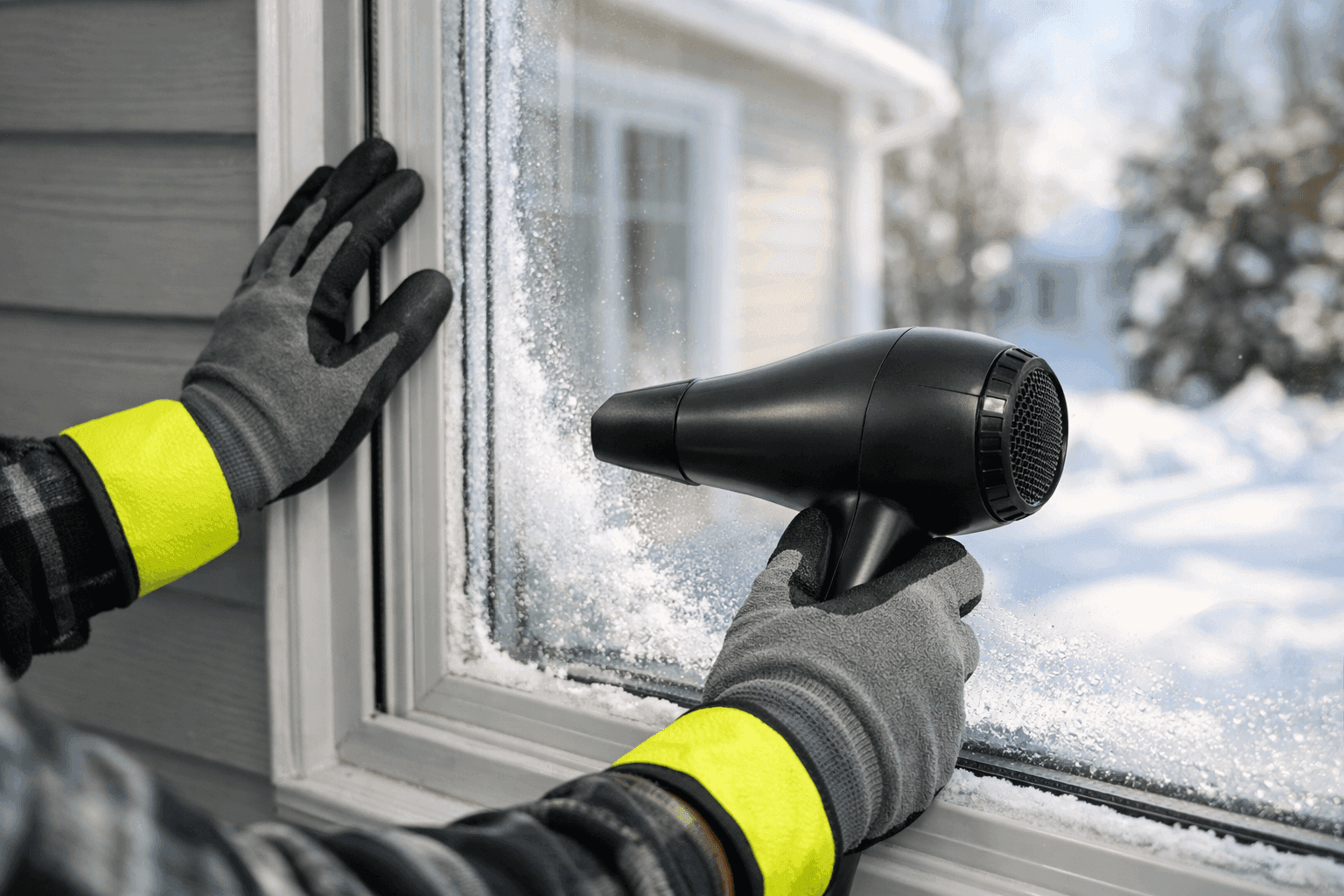
- Warm the Area Slowly: Use a hair dryer on low or medium, moving it along the frame and sill. Never use open flames.
- Melt the Ice: Gently chip away softened ice with a plastic spatula—never metal, which can scratch glass.
- Absorb Moisture: Wipe up melted water with a towel to prevent refreezing.
- Lubricate Tracks: Once the window moves freely, apply a silicone-based lubricant to the tracks.
- Test Locks and Latches: Make sure all hardware is working after defrosting.
If the window still won’t budge, or you notice cracks or broken locks, stop and call a pro.
DIY vs. Call a Pro
Some frozen windows are a quick fix. But others can be a sign of bigger problems, like worn-out seals or hidden frame damage. Here’s when to take action yourself, and when to bring in a windows_contractor:
DIY:
- Surface frost or thin ice
- Minor drafts or gaps
- Simple weatherstripping repairs
Call a Pro:
- Persistent freezing
- Cracked glass or warped frames
- Broken or rusted locks
- Water leaks or interior wall damage
What Pros Do On Arrival
A skilled windows_contractor arrives with a toolkit—and a trained eye. Here’s what you can expect:
- Detailed inspection of frames, locks, and seals
- Moisture and draft testing
- Safe defrosting with specialized tools
- Repair or replacement of damaged hardware and weatherstripping
- Advice on long-term window maintenance
Professionals follow safety standards and building codes (see International Residential Code), so your windows meet both comfort and safety requirements.
Prevention & Maintenance: Year-Round Habits
Think of window care like flossing—it’s not glamorous, but it keeps bigger headaches away. Here’s what we recommend:
- Clean window tracks and sills regularly to prevent moisture buildup.
- Schedule annual window inspections, especially before winter.
- Re-caulk and reseal exterior joints every few years.
- Enroll in a window maintenance plan for peace of mind.
Costs & Time Factors
Preventing frozen windows is affordable compared to repairing damage from repeated freezing. Most weatherstripping kits cost less than a nice dinner out. Window lock installation and professional maintenance are investments in both comfort and security.
Time? Most prevention steps take under an hour per window. Repairs and hardware replacements can often be handled in a single visit.
When It’s an Emergency 🛠️
Sometimes, a frozen window is more than a nuisance. Call for emergency help if:
- The window is needed for escape (egress) and won’t open
- There’s water leaking into your walls or electrical outlets
- You hear cracking noises from the glass or frame
- The window is frozen open, exposing your home to the elements
Champion Windows offers rapid response for situations like these—don’t wait if safety is at risk.
Common Mistakes to Avoid
We’ve seen homeowners make a few classic errors:
- Pouring hot water on glass (risk of shattering)
- Prying with metal tools (scratches and chips)
- Ignoring small drafts (“It’s just a little cold” can turn into big repairs)
- Skipping annual window checks
Take a gentle, proactive approach—your windows will thank you.
Signs of Trouble
Watch for these warning signals your windows need attention:
- Repeated freezing in the same spot
- Condensation between panes (insulated glass failure)
- Difficulty locking or unlocking windows
- Water stains or peeling paint around frames
Early action can prevent expensive repairs down the road.
Materials & Equipment for DIYers
Stock up on these essentials before winter:
- Hair dryer (for safe defrosting)
- Plastic spatula or old credit card
- Silicone-based lubricant
- Weatherstripping tape
- Window insulation kits
- Clean rags and towels
A little prep now saves a lot of frustration later.
Timeline & Disruption
Most prevention measures are quick and non-intrusive. Window lock installation or weatherstripping upgrades can be done with minimal mess. Only major frame repairs or glass replacements require more time—and even then, pros work to keep disruption minimal.
FAQ: Winter Window Worries
Q: Will window tinting help with freezing?
A: Tinting primarily reduces heat gain and glare, not drafts or moisture. Focus on sealing and insulation for freeze prevention.
Q: Can I use salt or de-icer spray?
A: Avoid harsh chemicals. They can damage finishes and seals. Stick to gentle heat and mechanical removal.
Q: How do I know if my locks are winter-ready?
A: Test every lock before winter. If you notice sticking, rust, or misalignment, consider professional Window Lock Installation.
When to Call a Champion Windows Pro
If you’ve tried prevention and your windows still freeze—or you notice cracks, leaks, or hardware damage—it’s time for help. Our team handles everything from inspections and repairs to full replacements, always using safe, code-compliant methods.
If you’re searching for a trusted windows_contractor company, visit our St. Charles windows_contractor company page to learn more about local services near you.
Stay warm, safe, and stress-free this winter. For any window issue—big or small—Champion Windows is ready to help.
Call Champion Windows now — or reach us anytime at 855-502-8869 .