How to Spot Window Problems Early: Homeowner’s Checklist
Windows are your home’s silent protectors. They let in sunshine. They keep out rain and wind. But over time, even the sturdiest window can hide problems that quietly sap comfort, safety, and energy dollars.
At Champion Windows, we’ve seen how small issues—drafts, foggy glass, a stubborn lock—can spiral into big headaches if ignored. The good news? Most window problems send warning signals long before they become emergencies. Here’s a practical, step-by-step checklist every homeowner should use to keep their windows in top shape.
Common Window Warning Signs 🧐
Think of your home’s windows like the dashboard lights in your car. They’ll warn you when something’s off, but only if you know what to look for. Here are the tell-tale signs:
- Drafts or chills: Feel a breeze when the window is closed? That’s often the first sign of failed caulking or weatherstripping.
- Condensation between panes: Foggy glass or moisture trapped inside double-pane windows signals a broken seal.
- Difficulty opening or closing: If the window sticks, jams, or needs muscle, it may be warped or the hardware could be failing.
- Visible frame damage: Cracks, rot, or soft spots around the frame can mean water intrusion and structural issues.
- Peeling paint or stains: Water leaks often leave behind peeling paint or brown stains on the wall or sill.
- Unusual noises: Rattling in the wind or odd creaks may mean loose components or worn-out seals.
- Increased energy bills: Rising heating or cooling costs can hint at windows losing their insulation power.
Spotting these issues early can save time, money, and stress down the road.
How to Inspect Each Room
Walk room by room. Start simple—just let your senses lead. Here’s how:
Living Room & Bedrooms
- Check for drafts: Move your hand around the window edges. Feel any chill or air movement?
- Test the locks and latches: Make sure every mechanism slides and clicks easily. If not, it might be time for a Window Lock Installation.
- Look for condensation: Morning is best. Foggy glass often appears after a cool night.
Kitchen & Bathrooms
- Inspect for moisture damage: Kitchens and baths are steamy. Check for peeling paint, swollen sills, or mold.
- Open and close windows: If a window sticks, the frame may be swelling from hidden leaks.
Basement & Attic
- Check egress windows: These must open easily in case of emergency. Sticking, rust, or frame rot are red flags.
- Look for signs of pests: Gaps in frames or torn screens can be entry points for insects or rodents.
Sunrooms & Additions
- Inspect skylights: Leaks or condensation around skylights are common warning signs. Skylight repair may be needed.
- Test specialty windows: Hopper, awning, or jalousie windows need regular checks for smooth operation.
Tools for DIY Inspections
You don’t need fancy gear, but a few basics can make your window inspections easier:
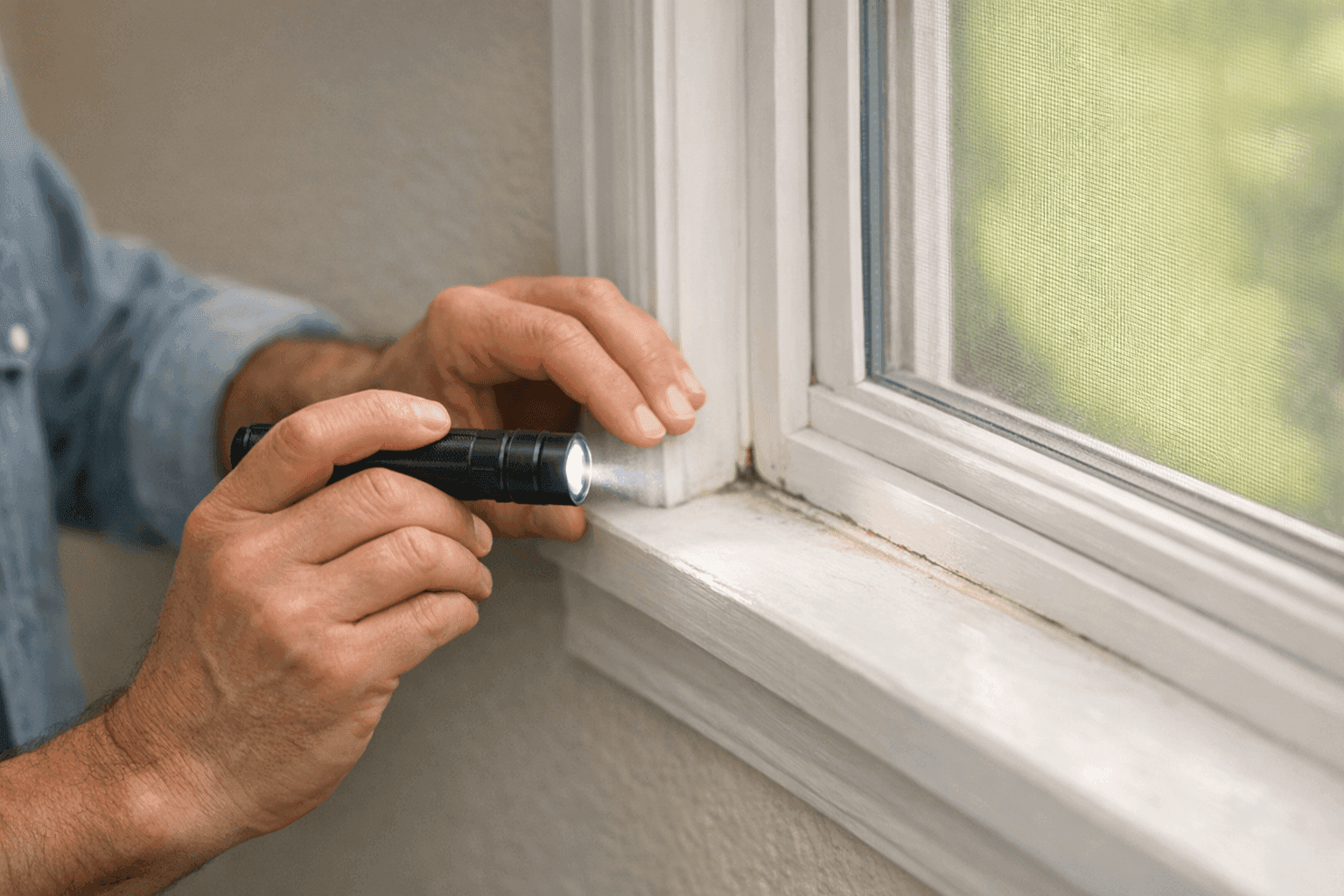
- Small flashlight: Perfect for spotting cracks, rot, or hidden mold in dim corners.
- Credit card or thin paper: Slide it along the edge to detect gaps or failed weatherstripping.
- Level: Windows should be square—use a level to check for sagging or shifting.
- Camera or phone: Snap photos of any issues for documentation or to show your windows_contractor.
- Non-toxic cleaner: Clean glass and sills so you can spot trouble without dirt getting in the way.
When to Call a Pro
DIY checks are great, but some signs mean it’s time for professional help. Call a windows_contractor if you notice:
- Condensation between panes on newer windows (indicates seal failure).
- Rotting or crumbling wood—this can mean hidden water leaks.
- Stiff, stuck, or broken locks—important for security and safety.
- Major shifts or cracks in the frame—could signal foundation movement.
- Sudden spikes in energy bills with no obvious reason.
- Visible mold—especially if it keeps coming back after cleaning.
A professional window inspection can reveal hidden issues and recommend safe, cost-effective repairs.
DIY vs. Professional Window Inspections
It’s tempting to handle every repair yourself. But windows are complex. Some fixes—like weatherstripping or basic cleaning—are great DIY tasks. Others, such as window glass replacement, frame repair, or advanced window lock installation, need the tools and experience only a pro brings.
Remember: what looks like a simple draft could be the tip of the iceberg. A Champion Windows technician uses specialized moisture meters, thermal cameras, and years of know-how to spot what’s hiding beneath the surface.
Quick Safety Checklist 🛠️
- Make sure all bedroom windows open easily—vital for fire escape routes.
- Test locks monthly for smooth operation.
- Keep furniture clear of egress window exits.
- Fix broken glass or cracked panes immediately to prevent injury.
- Check for signs of lead paint if your home was built before 1978 (see EPA guidelines).
Prevention & Maintenance Tips
An ounce of prevention is worth a pound of glass. Here’s how to keep window troubles at bay:
- Schedule annual window inspections—especially before harsh weather.
- Re-caulk and reseal every few years, or sooner if you spot gaps.
- Clean window tracks and keep them free of dirt and debris.
- Replace or repair screens to keep bugs and debris out.
- Enroll in Window Maintenance Plans for hassle-free care.
Costs & Time Factors
The cost of catching window problems early is almost always lower than waiting for a major repair. Simple fixes like weatherstripping or caulking take minutes and cost little. Neglect, on the other hand, can lead to pricey frame repairs or even full window replacement.
Most professional inspections take about an hour for an average home. Repairs can range from same-day fixes to a few days, depending on the issue.
When It’s an Emergency
Some window problems can’t wait:
- Broken glass: Always secure and repair immediately, especially in homes with children or pets.
- Windows that won’t lock: Compromised security requires urgent attention.
- Water leaks during storms: Quick action can prevent major wall or floor damage.
- Severe drafts in winter: Can lead to frozen pipes or dangerous temperature drops.
Champion Windows offers emergency window services for these situations, ensuring your home stays safe.
Seasonal Considerations 🌦️
Your windows face different stresses as the seasons change:
- Spring/Fall: Best times for inspections. Look for winter damage or prep for summer storms.
- Summer: Check for warping or swelling from heat and humidity.
- Winter: Watch for drafts, ice buildup, and condensation.
Pro tip: Schedule window inspections before the first freeze or major heatwave.
Common Mistakes Homeowners Make
- Ignoring small drafts—these rarely fix themselves.
- Painting over rot or moisture damage instead of repairing.
- Using the wrong cleaners, which can damage seals and finishes.
- Waiting until a problem is “bad enough” to address.
- Forgetting to check less-used windows, like in basements or attics.
Signs of Trouble Unique to Older Homes
Older windows can add charm, but they also bring specific challenges:
- Single-pane glass: Less energy efficient, prone to condensation.
- Lead paint risks: For homes built before 1978, follow EPA safety guidelines when scraping or painting.
- Outdated hardware: Harder to find replacements; can compromise function and security.
Timeline & Disruption: What to Expect
Most basic window repairs or inspections cause minimal disruption. You’ll need to move furniture away from windows and clear sills. For larger jobs, like frame repair or full replacement, expect a few hours up to a day per window.
Champion Windows takes care to minimize mess and keep your home secure throughout the process.
Materials & Equipment Pros Use
Professional windows_contractor services use:
- Thermal imaging cameras: Reveal drafts and hidden leaks.
- Moisture meters: Detect water intrusion inside walls or frames.
- Specialty caulks and weatherstripping: For lasting, energy-efficient seals.
- Custom-fit hardware: Ensures smooth, secure operation.
What Pros Do On Arrival
When you schedule a window inspection, here’s what to expect:
- Walkthrough and visual assessment of all windows.
- Use of diagnostic tools to check for hidden leaks or drafts.
- Testing of every lock, latch, and opening mechanism.
- Recommendations for repair, replacement, or maintenance.
- Clear, straightforward answers—no jargon, just real solutions.
Frequently Asked Questions
How often should I inspect my windows?
Twice a year is ideal—once in spring, once in fall. But check anytime you notice a draft or see damage.
Are modern windows really more energy efficient?
Yes. ENERGY STAR®-certified windows can dramatically reduce heat loss and lower utility bills.
Can I just replace one window?
Absolutely. You don’t have to replace every window at once—target problem spots first.
Is window tinting worth it?
For sun-facing rooms, yes. Tinting reduces glare, protects furnishings, and improves privacy.
Local Service Highlight
If you’re looking for reliable Window Inspections, Champion Windows is here to help with thorough, friendly service.
Your windows work hard to keep you comfortable and safe. Don’t let small problems sneak up on you. Use this checklist to spot issues early, and call Champion Windows when you need a professional hand.
Call Champion Windows now — or reach us anytime at 855-502-8869 .