Skylight Installation: Benefits, Planning, and Safety
Picture this: sunlight flooding your living room and making every morning feel a little brighter. Skylights are more than just windows on your roof—they’re a way to change the entire mood of your home. But the path from idea to installation isn’t always clear.
At Champion Windows, our team helps homeowners bring natural light indoors, safely and efficiently. Whether you’re just starting your research or ready to cut a hole in the ceiling, here’s your guide to skylight installation, planning, and safety.
Why Add a Skylight? ☀️
Sometimes, regular windows just don’t cut it. Skylights open up rooms in ways no other window can—bringing sunlight straight down, even into the darkest corners. Here’s why more homeowners are calling a windows_contractor for skylight installation:
- Daylight, all day: Skylights pull in up to three times more light than vertical windows of the same size.
- Energy savings: Properly placed, they can reduce your need for electric lighting and even help with passive solar heating in winter.
- Fresh air: Many skylights open, helping with ventilation and cooling.
- Visual impact: A skylight can make a small room feel bigger and more inviting.
- Mood booster: Natural light has proven benefits for health and well-being.
According to the U.S. Department of Energy, well-designed skylights can help manage your home’s temperature and cut energy costs—but only if installed correctly.
Site Selection and Planning
Installing a skylight isn’t as simple as picking a spot and cutting. Here’s what goes into planning:
Assessing Your Roof
- Roof pitch: Most skylights work best on roofs with a slope between 15 and 60 degrees.
- Obstructions: Rafters, HVAC lines, or electrical work can block skylight placement.
- Weather exposure: Consider wind, rain, and snow patterns. South-facing skylights get the most sun but may overheat rooms in summer.
Room Purpose and Placement
- Living rooms: Great for dramatic light and open ceilings.
- Bathrooms: Adds privacy-friendly daylight.
- Hallways and stairwells: Brightens up otherwise dark spaces.
Skylight Size and Type
- Fixed vs. vented (opening) skylights
- Glass vs. acrylic glazing
- Energy efficiency coatings
- Manual or remote operation
A reputable windows_contractor will help you design a solution that matches your home and goals. For trickier spaces or unique roof lines, Custom Window Solutions are available.
Installation Steps: From Start to Finish
Here’s what you can expect during skylight installation:
- Consultation and Inspection: A trained technician will assess your roof and attic, checking for obstacles and measuring for placement.
- Marking the Opening: The exact spot is marked inside and outside, ensuring alignment and fit.
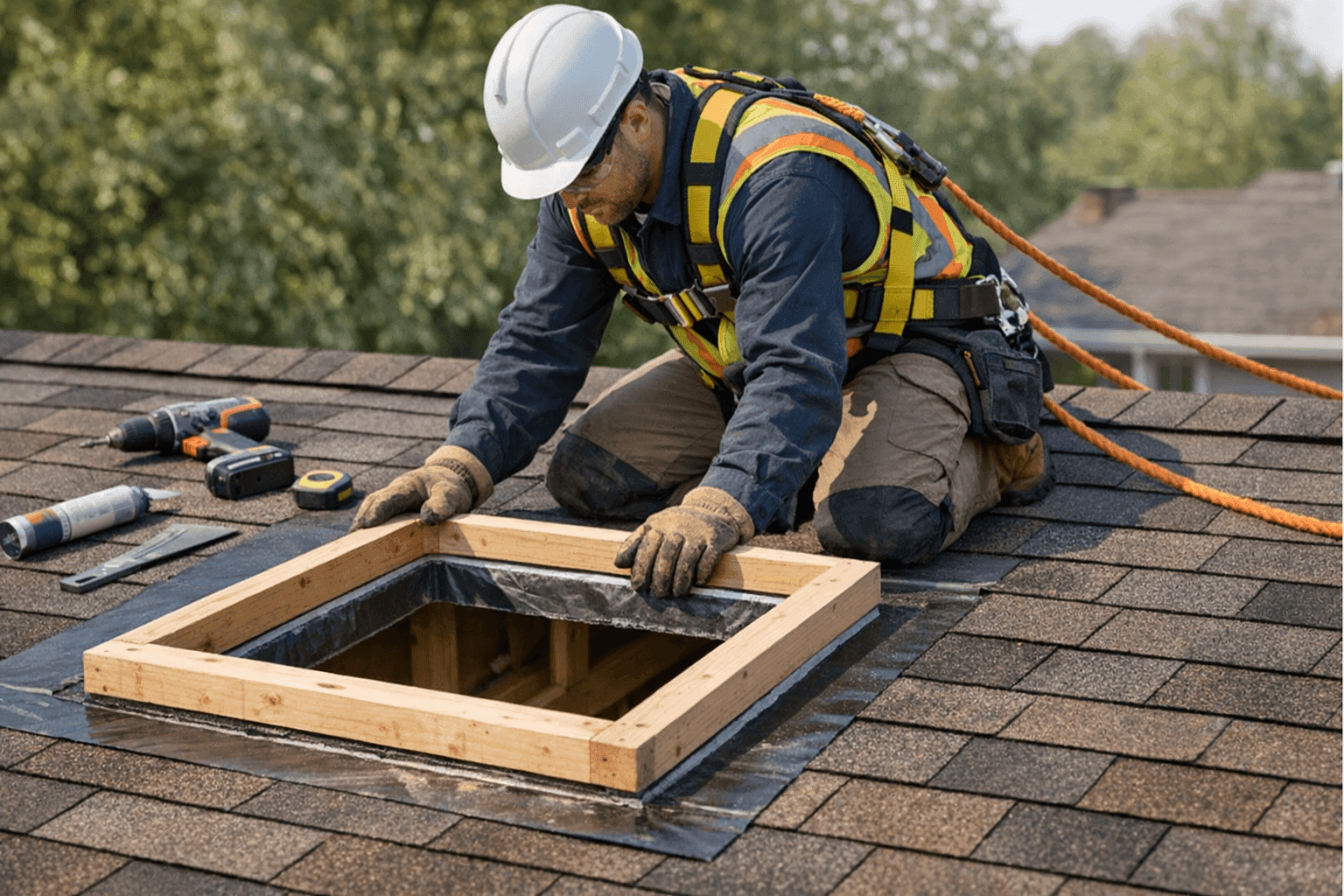
- Cutting the Opening: Precision is key. Roofing material and decking are removed, usually with a saw or reciprocating tool.
- Framing: Reinforcing the opening with headers and supports prevents sagging or leaks.
- Skylight Placement: The window is set in place, checked for level, and secured.
- Flashing and Sealing: Waterproof flashing is installed per manufacturer and code requirements to prevent leaks. High-quality caulking seals the deal.
- Interior Finishing: Drywall or trim is added for a polished look.
- Final Inspection: Everything is checked—inside and out.
If you’re considering a full window upgrade or adding more light to multiple rooms, our Window Installation team can help coordinate the project.
Safety Considerations and Building Codes 🛠️
Cutting into your roof isn’t a weekend project. Safety and compliance are serious business:
Codes and Permits
- Local Building Codes: Most municipalities require permits for skylight installation. Codes dictate minimum glazing strength, egress requirements (for bedrooms), and placement.
- Energy Efficiency: Look for ENERGY STAR® or National Fenestration Rating Council (NFRC) labels.
- Fire Safety: In some areas, fire-rated glass or placement away from property lines is mandatory.
Risks of Improper Installation
- Leaks: Poor flashing or caulking is the #1 cause of skylight problems.
- Structural damage: Cutting a rafter or failing to reinforce the opening can weaken your roof.
- Condensation: Without proper insulation and vapor barriers, moisture can collect and cause mold.
Professional Precautions
- Roof harnesses and fall protection
- Dust masks and goggles
- Ladder safety and two-person teams
Champion Windows’ crews follow Occupational Safety and Health Administration (OSHA) guidelines and manufacturer instructions on every project.
Quick Safety Checklist
Before you start—or hire a pro—review these essentials:
- Got a building permit?
- Checked the weather forecast? (Avoid rain or snow.)
- Marked all electrical and HVAC lines in the attic?
- Have the right flashing kit for your roof type?
- Using only tempered or laminated glass for overhead use?
If any of these are a “no,” it’s time to pause and consult with a windows_contractor.
DIY vs. Call a Pro
Tempted to try it yourself? While some handy homeowners manage small skylight projects, most installations call for professional expertise:
- Navigating rafters and roof structures
- Custom flashing for leak-proof seals
- Ensuring code compliance
- Safely working at heights
One misstep can lead to water damage or costly repairs. For peace of mind, a professional windows_contractor near you is worth every penny.
What Pros Do When They Arrive
Expect a step-by-step approach:
- Full roof and attic inspection
- Measurement and layout based on structural supports
- Consultation about glass type, coatings, and ventilation options
- Clean, careful cutting and framing
- Meticulous waterproofing and sealing
- Thorough cleanup and debris removal
You’re left with a bright, leak-free skylight—no surprises.
Prevention and Maintenance
A skylight isn’t “set it and forget it.” Here’s how to keep it working and looking great:
- Inspect for leaks, cracks, or drafts every spring and fall
- Clean glass and frames with mild soap and water
- Check caulking and flashing for signs of wear
- Trim back tree branches to prevent debris buildup
Champion Windows also offers window maintenance plans for ongoing care.
Costs & Time Factors
Skylight installation costs can vary:
- Size and type of skylight: Larger or vented models cost more.
- Roof structure: Complex trusses or steep pitches add time and labor.
- Interior finishing: Drywall and painting are often extra.
Most residential skylight installations take 1-2 days from start to finish, weather permitting.
When It’s an Emergency
Skylights can break due to hail, falling branches, or accidents. If your skylight is damaged:
- Cover the opening with a waterproof tarp immediately
- Avoid walking on the roof
- Call a professional for emergency window services
Champion Windows handles urgent repairs, including glass replacement and weatherproofing.
Frequently Asked Questions
Can I install a skylight in any room?
Most rooms with a roof overhead are candidates, but attic and roof structures can limit options.
Will a skylight make my home too hot?
Modern skylights use low-E coatings and venting options to control heat gain.
How do I prevent leaks?
Professional installation and high-quality flashing are critical. Maintain caulking and check after severe weather.
Are skylights safe?
Yes—when installed with tempered or laminated glass and in accordance with local codes.
For more on building codes and skylight requirements, check resources like the International Residential Code (IRC) and ENERGY STAR®.
Seasonal Considerations
- Winter: Ice dams and heavy snow require extra flashing and insulation.
- Summer: Consider tinted or low-E glass to reduce heat.
- Spring/Fall: Ideal times for installation—mild weather means fewer delays.
Common Mistakes
- Ignoring rafter layout—never cut a structural beam without reinforcement
- Skipping the flashing kit—universal kits rarely fit perfectly
- Using standard window glass instead of safety-rated glass
- Rushing caulking and sealing
A little patience and the right windows_contractor company can prevent costly headaches.
Signs of Trouble
Watch for:
- Water stains around the skylight frame
- Drafts or whistling sounds
- Condensation or foggy glass
- Cracked or loose flashing
Early repairs can prevent major damage.
Timeline and Disruption
Most projects take less than two days. Expect noise, dust, and some foot traffic. Professional crews protect your home with tarps and clean up thoroughly.
Materials and Equipment
- Skylight unit (fixed or vented, glass or acrylic)
- Flashing and weatherproofing kits
- Roofing nails and sealants
- Safety harnesses, ladders, and cutting tools
A professional comes prepared for every scenario, so you don’t have to make last-minute trips to the hardware store.
Ready to Let the Light In?
A well-placed skylight can change the feel of your home—brightening your mornings, saving energy, and adding value. If you’re weighing your options or need a trusted windows_contractor company, Champion Windows is here to guide you every step of the way. We offer everything from skylight installation to full Window Installation and Custom Window Solutions.
If you’re in the area and searching for a windows_contractor, learn more about our services in Green Bay.
Call Champion Windows now — or reach us anytime at 855-502-8869 .