Window Energy Audits: Step-by-Step Homeowner Guide
Is your home feeling drafty, or is your energy bill climbing without explanation? You’re not alone. Many homeowners don’t realize how much heat—and cash—can slip right through inefficient windows. At Champion Windows, we know how frustrating it is to chase comfort while watching your budget evaporate.
A window energy audit shines a light on the real culprits. It’s not just about pointing fingers at old panes—it’s about understanding, step by step, how your windows perform and what can be done to make your home cozier and more efficient.
What Is a Window Energy Audit? 🔎
Think of a window energy audit as a health checkup for your home’s windows. Instead of a stethoscope, we use specialized tools and a trained eye to spot where energy sneaks out and where the cold creeps in.
A good audit pinpoints energy loss—much like a detective tracing footprints at a scene. The goal? To find gaps, cracks, or outdated features that quietly drain your comfort and wallet.
It’s more than a quick glance. A thorough audit looks at:
- Visible drafts and cold spots
- Window frame and seal integrity
- Types of glass and glazing
- Locks, latches, and weatherstripping
- Past repairs and future risks
This process arms you with facts. It shows exactly where upgrades, like Energy-Efficient Windows, could make a tangible difference.
Why Do Window Energy Audits Matter?
Imagine heating your home with the windows wide open. Not practical, right? Yet, every year, U.S. households lose billions through leaky, inefficient windows—according to the Department of Energy.
An audit doesn’t just flag problems—it guides you to smart fixes. That means lower bills, fewer drafts, and a home that feels—and is—safer and more comfortable.
Wondering if this is just for older homes? Even new builds benefit: installation mishaps, poor caulking, or the wrong window type can all sabotage efficiency.
Quick Safety Checklist Before You Start
Before beginning any audit—whether DIY or professional—safety comes first. Here’s what to check:
- Ladders: Secure footing if inspecting upper-story windows.
- Glass: Watch for cracks or loose panes.
- Electrical: Be cautious if using tools near outlets.
- Weather: Avoid outdoor inspections in severe conditions.
Gloves and safety glasses can keep splinters and debris at bay. Never force stubborn sashes or locks—you could damage the frame or injure yourself.
DIY Audit Steps: Where to Begin
You don’t need fancy gadgets to spot the biggest issues. Here’s a simple roadmap any homeowner can follow:
1. Feel for Drafts
On a windy day, close all windows and doors. Move a damp hand or a lit incense stick slowly around the window frame. Smoke or chills signal a leak.
2. Inspect Caulking and Seals
Look for cracked, missing, or peeling caulk. Even tiny gaps let warm air escape. If you spot issues, consider Window Caulking and Sealing for a tighter home.
3. Check Locks and Latches
Loose or broken hardware invites drafts and can compromise security. Note malfunctioning parts for repair or replacement.
4. Examine Glass and Frames
Foggy panes, moisture between glass layers, or warped frames are red flags. These not only waste energy but can also indicate bigger structural concerns.
5. Test for Rattles
Gently shake the sash. If it rattles, air is likely sneaking in—and out.
Professional Audit Tools: Going Beyond the Naked Eye 🛠️
A windows_contractor brings more than experience. They bring tools that reveal what you can’t see:
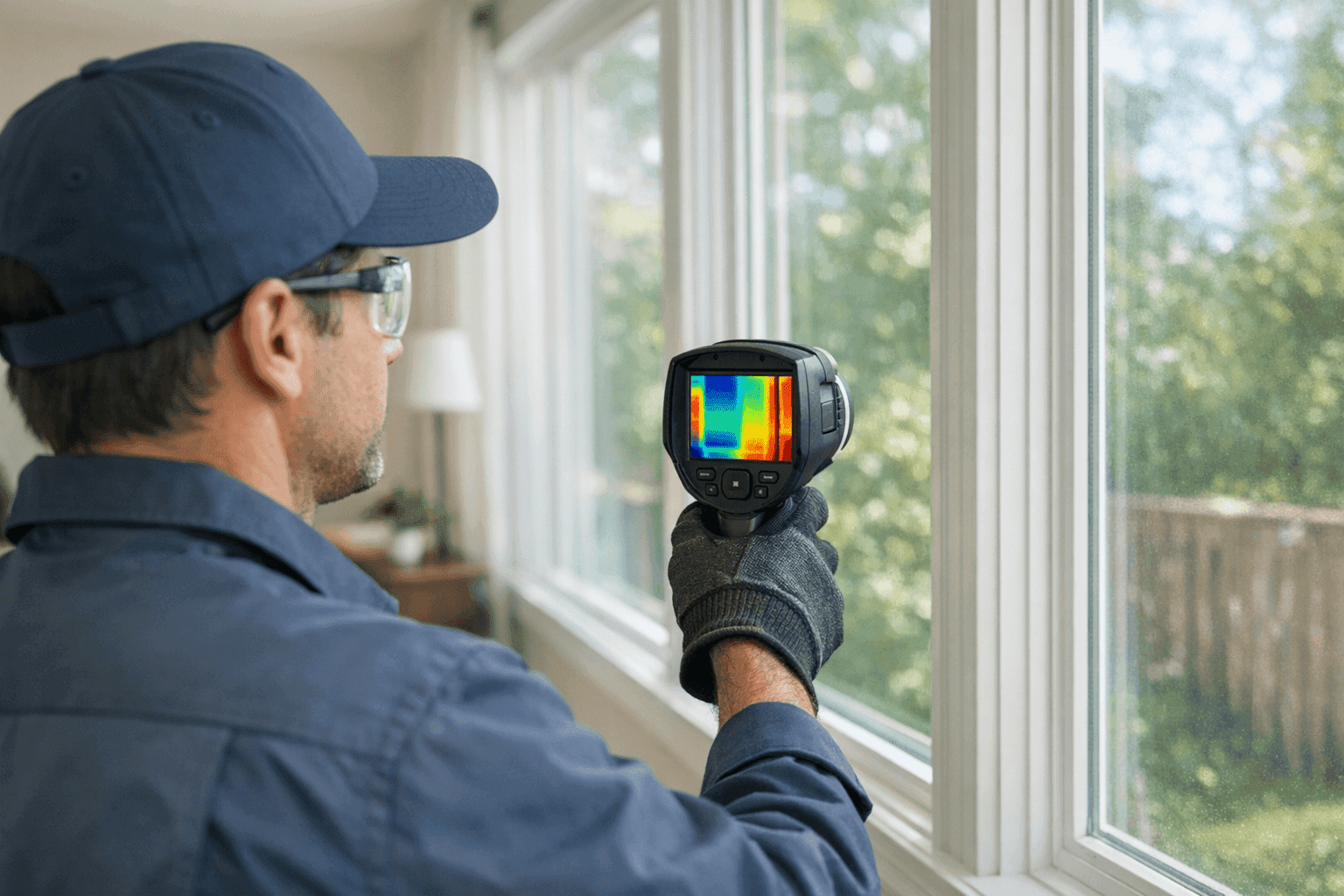
- Infrared Cameras: These “see” temperature changes, showing where heat escapes or cold seeps in.
- Blower Door Tests: A fan temporarily lowers the air pressure inside your home, exaggerating leaks for easier detection.
- Smoke Pencils: Similar to incense, but more precise for pinpointing drafts.
- Moisture Meters: Check for hidden water problems that can damage frames and glass.
Champion Windows technicians combine these tools with years of hands-on know-how. This blend of science and skill means no leak goes undetected.
What Pros Do On Arrival
When you schedule a window energy audit, here’s what to expect:
- Initial Walkthrough: We listen to your concerns and learn about your home’s history.
- Room-by-Room Assessment: Each window, frame, and seal is checked—inside and out.
- Tool-Based Testing: Using infrared and blower door tests, we map out energy loss patterns.
- Detailed Reporting: You get a clear, written summary of findings—no technical jargon.
- Actionable Recommendations: From simple caulking to considering new Energy-Efficient Windows, you’ll have a prioritized list of next steps.
Interpreting Results: What Do the Numbers Mean?
Audit reports can feel like reading a weather map. Here’s how to make sense of them:
- High Heat Loss: Indicates major leaks; repairs or upgrades needed.
- Moderate Loss: Often fixable with new caulking, weatherstripping, or minor repairs.
- Low Loss: Congrats—your windows are working hard for you, but small tweaks may help further.
Every home is different. The important thing is to focus on the fixes that deliver the best return on investment—sometimes, a tube of caulk does more than a full replacement.
Prevention & Maintenance: Small Steps, Big Payoff
Regular maintenance keeps energy loss from sneaking up on you. Here’s what you can do:
- Reapply caulk and replace weatherstripping every few years.
- Clean window tracks and sills to keep seals tight.
- Lubricate locks and hinges so windows close fully.
- Schedule periodic window inspections—especially before winter or summer.
Routine care goes a long way. Just like brushing your teeth prevents cavities, these habits keep your windows efficient and healthy.
Common Mistakes to Avoid
Even the most diligent homeowners slip up. Here’s what not to do:
- Ignoring tiny drafts: Small leaks add up over time.
- Using the wrong caulk: Always choose exterior-grade for outdoor work.
- Skipping annual checks: Problems grow when left unaddressed.
- DIY repairs without research: Some fixes require professional know-how—don’t risk making things worse.
Costs & Time Factors: What to Expect
A window energy audit is an investment. But it pays for itself by slashing monthly energy bills. Here’s a ballpark:
- DIY checks: Free, but limited in scope.
- Professional audits: Vary by home size and region, but usually take 2–4 hours.
- Repairs or upgrades: Costs depend on what’s found—sometimes, a simple fix is all you need.
Remember, the cost of doing nothing is often higher in the long run.
Signs It’s Time for an Audit
Still unsure? Look for these clues:
- Unexplained spikes in heating or cooling bills
- Persistent drafts, no matter the season
- Condensation or fog between window panes
- Difficulty opening or closing windows
- Visible damage or decay on frames and sills
If any ring true, it’s time for a closer look.
DIY vs. Call a Pro: Making the Choice
DIY audits catch the obvious. But some leaks are sneaky—hiding behind walls or under trim. If you’re handy and curious, start with a self-inspection. For peace of mind and maximum savings, bring in a windows_contractor for a full assessment.
A professional audit is especially valuable if you’re considering window replacement, major renovations, or if you just moved into a new home.
When It’s an Emergency
Broken glass, storm damage, or sudden drafts in extreme weather call for fast action. Emergency window services can prevent further damage and keep your family safe.
FAQ: Your Top Window Audit Questions
How often should I get a window energy audit?
Every 3–5 years, or after major weather events, renovations, or unexplained energy cost jumps.
Are all audit tools safe for my home?
Yes—when used by trained pros. Tools like infrared cameras and blower doors are non-invasive and don’t damage your windows.
Can weather affect my audit results?
Extreme temperatures can exaggerate leaks, making them easier to spot. Spring and fall are ideal for accuracy.
For more information, check resources from the U.S. Department of Energy and your local building codes.
Timeline & Disruption: What’s Involved?
A typical audit takes a few hours. You’ll need to be home, and access to windows (plus attic or basement, if relevant) is helpful. There’s minimal disruption—no need to move furniture, and no mess left behind.
Seasonal Considerations
Heat waves and cold snaps can make leaks more obvious. Schedule audits before winter or summer for best results—and to stay ahead of the weather.
Next Steps: Turning Insights Into Action
After your audit, you’ll have a roadmap. Some fixes are quick: caulking, weatherstripping, or cleaning tracks. Others—like installing new Energy-Efficient Windows—require planning but offer dramatic long-term savings.
If you’re in the area and searching for windows_contractor services, Champion Windows provides thorough audits and repairs. We even offer Window Energy Audits to help make your home more comfortable.
Ready to Maximize Comfort and Savings?
Don’t let energy slip through the cracks. Take control with a window energy audit—and see real results in your comfort and your budget.
Call Champion Windows now — or reach us anytime at 855-502-8869 .